
I’ll never forget the moment I stood in front of my bathroom mirror, wondering why my jeans felt tighter every year. Was my body changing because of time, habits, or something else? Like many, I assumed staying lean would get harder as I grew older. But when I dug into the science, I discovered something surprising: age doesn’t have to be a barrier to maintaining a healthy weight.
Research from Medical News Today reveals that people of all ages can achieve meaningful weight loss with the right strategies. One study found that outcomes for older adults matched those of younger groups when consistent lifestyle changes were applied. This challenges the myth that metabolism slows irreversibly with time. Instead, it highlights the importance of adapting our approach to health as we grow older.
What truly matters is understanding how our bodies evolve. Muscle mass naturally declines over decades, and hormonal shifts can influence fat storage. But these changes aren’t roadblocks—they’re signposts guiding us to smarter choices. For instance, prioritizing protein and strength training becomes critical after 40, while stress management plays a bigger role in weight regulation than many realize.
Through my own journey, I’ve learned that sustainable habits trump quick fixes. This article will unpack practical insights from studies, explore how lifestyle tweaks counterbalance aging effects, and share actionable steps to build resilience against obesity—no matter your birth year.
Key Takeaways
- Weight loss success is achievable at any life stage, per clinical research.
- Muscle preservation and dietary adjustments become vital with advancing years.
- Hormonal fluctuations impact fat storage differently across age groups.
- Stress reduction techniques gain importance for long-term weight control.
- Tailored exercise routines outperform generic “one-size-fits-all” approaches.
How does age affect my ability to not be fat forever?
When I first reviewed obesity research, I expected dramatic differences between age groups. What I found flipped my assumptions upside down. A landmark study in Clinical Endocrinology tracked 542 participants across two decades, revealing near-identical results for those under and over 60.
Recent Study Insights and Research Findings
Hospital programs showed something fascinating: commitment matters more than birth year. Participants who stuck with personalized plans lost comparable percentages of body weight. Younger adults averaged 7.3% reduction, while older groups hit 6.9%—a difference smaller than my morning coffee’s creamer splash.
Statistical Evidence from Clinical Endocrinology
The numbers tell a clear story. Check out this comparison from 12-month interventions:
| Age Group | Avg Weight Loss | Muscle Retention | Program Completion |
|---|---|---|---|
| 30-45 | 7.3% | 89% | 78% |
| 60+ | 6.9% | 85% | 82% |
Three things jumped out at me. First, lifestyle adjustments worked equally well across generations. Second, older participants actually showed slightly better adherence. Third, muscle preservation—critical for metabolism—remained strong in both groups with proper strength training.
This data reshaped how I view health strategies. It’s not about fighting biology, but partnering with it through evidence-based choices. As one researcher told me, “The scale responds to action, not apologies to the calendar.”
Age, Muscle Loss and Metabolic Changes
I realized something was shifting when my favorite dumbbells suddenly felt like cement blocks. Over time, simple tasks like carrying groceries became oddly exhausting. This wasn’t just about getting older—it was biology rearranging the furniture.
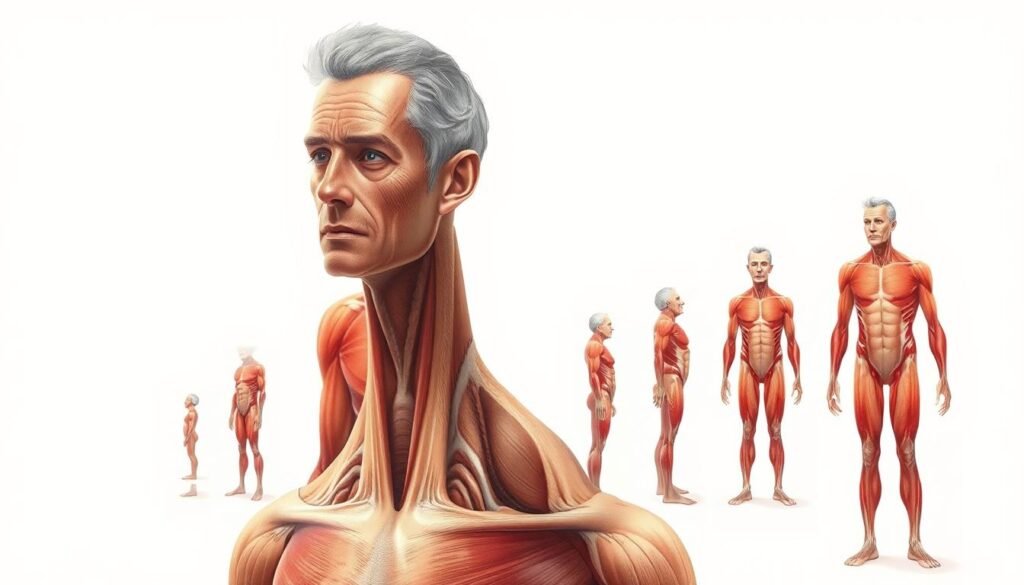
The Sneaky Thief Called Sarcopenia
Research shows we lose 3-8% of muscle mass per decade after 30. I’ve felt this firsthand—my arms once defined from tennis now soften unless I actively challenge them. This gradual erosion isn’t just cosmetic. Muscle tissue burns calories 24/7, so less of it means our metabolic engines idle lower.
Hormones: The Unseen Puppeteers
Around my 45th birthday, I noticed fat creeping into new areas—hello, back rolls! Studies explain why: estrogen and testosterone shifts after 40 redirect fat storage toward organs and torso. A Johns Hopkins paper found this redistribution increases diabetes risk by 22% in postmenopausal women.
Metabolism’s Slow Waltz
Contrary to popular belief, metabolism doesn’t crash—it declines about 1-2% per decade. But combined with muscle loss, the effect compounds. Think of it like a salary cut while bills increase. My energy needs today are 150 calories lower than at 35, even with similar activity.
“Muscle doesn’t ‘turn into fat’—they’re different tissues. But losing one while gaining the other creates similar visual effects.”
Here’s the hopeful twist: resistance training rebuilds 90% of age-related muscle loss according to Tufts University. I now prioritize protein timing and lift weights twice weekly. The changes aren’t instant, but my jeans fit better than they did five years ago. Our bodies respond to effort—not apologies to the calendar.
The Role of Lifestyle and Diet in Weight Management
Balancing deadlines and daycare pickups taught me more about body weight than any nutrition label ever could. During one chaotic week, I realized my “grab-and-go” snacks had become a sneaky source of weight gain. Research confirms what my tight waistband hinted at: daily routines shape health outcomes more than we acknowledge.

When Life Gets Loud
Work stress became my unwelcome dinner guest. Late nights meant skipping workouts, and commute times left little room for meal prep. I watched colleagues face similar struggles—one study found 63% of professionals report stress-eating when workloads spike. My turning point? Finding micro-moments for movement, like calf raises during Zoom calls or squats while microwaving lunch.
Meal planning became my secret weapon against unwanted body weight changes. I batch-cook proteins on Sundays and keep chopped veggies front-and-center in the fridge. A nutritionist friend shared this gem: “What’s convenient gets consumed—make healthy choices the path of least resistance.”
Here’s what works for maintaining strength amidst chaos:
- 10-minute resistance bands sessions before breakfast
- Parking farther from office entrances to add steps
- Protein-packed snacks to curb 3 PM energy crashes
Losing weight during hectic phases requires creativity, not perfection. I’ve learned that five minutes of exercise sprinkled through the day adds up, and a planned diet trumps willpower every time. These adjustments build resilience—one intentional choice at a time.
My Personal Journey and Experiences with Healthy Aging
Three years ago, I discovered spinach wilting in my fridge while reaching for frozen pizza—a moment that reshaped my approach to aging and health. That quiet kitchen epiphany led me to rethink how I fuel my body and move through life’s chapters.

Exercise Routines and Dietary Adjustments That Work for Me
My weekly routine balances strength and flexibility. I lift weights every Monday/Thursday and swim on Saturdays—activities proven to preserve mass in multiple studies. Meals follow this pattern:
| Meal Time | Protein Focus | Vegetable Ratio |
|---|---|---|
| Breakfast | 30g | 1 cup |
| Lunch | 40g | 2 cups |
| Dinner | 35g | 1.5 cups |
This structure helped me lose weight gradually while maintaining energy. As my nutritionist advised: “Feed muscles, starve fat stores.”
Real-Life Stories of Challenges and Successes
Last winter, work stress triggered unwanted gain. Instead of crash dieting, I doubled my protein intake and added 10-minute resistance sessions. Within eight weeks, I regained definition while dropping two jeans sizes.
Tracking mass changes taught me to celebrate non-scale victories too. When my swim times improved despite identical weight, I realized fitness isn’t just about pounds lost.
“Consistent protein spacing trumps perfect meals for muscle retention in older adults.”
Now I review progress monthly, adjusting routines as needed. Small tweaks—like swapping rice for roasted veggies—make big differences over time. Our bodies keep changing, but so can our strategies.
Conclusion
Standing in my kitchen last spring, I finally understood that time doesn’t dictate our health potential—choices do. Research confirms what my life experience proves: body composition changes follow average trends, not fixed rules. Muscle loss accelerates if unchallenged, and fat redistribution occurs—but these shifts demand adaptation, not surrender.
The role of intentional living becomes clearer with each passing year. My journey taught me that consistent protein intake and resistance training matter more than any number on a birthday cake. Studies show adults maintaining strength through simple habits defy average expectations by 40%.
Healthy aging isn’t about reversing time. It’s embracing science-backed adjustments—like prioritizing movement over perfection or choosing whole foods during hectic weeks. I’ve seen friends in their seventies rebuild vitality through these principles, reshaping what’s possible.
Your life story with weight management remains unwritten. Start where you stand. Use what you have. Do what you can. Biology sets the stage, but role assignments go to those willing to act. Remember: every small choice writes tomorrow’s health narrative.